The question usually arrives with two lab reports placed side by side. One is from before HRT. The other is from a few months after. The LDL has come down, which feels like good news. The triglycerides have gone up, which does not. And somewhere between the two a woman starts to wonder whether the tablet that finally stopped her night sweats is quietly doing something to her heart.
The short version: for most women, starting HRT moves cholesterol numbers modestly, mostly in a helpful direction, and the part that moves the wrong way depends heavily on which form of HRT you take. That is useful to understand, because it means a surprising lipid report is often explained by the prescription rather than by anything you did, and because in the small group of women whose triglycerides are already high, the route choice becomes a real safety decision.
What This Post Covers
- What oral oestrogen does to LDL, HDL, triglycerides and lipoprotein(a)
- Why a patch or gel changes the picture
- How the progestogen you take, and tibolone, affect HDL
- Why HRT is not a cholesterol treatment, even when the numbers improve
- When high triglycerides change the plan
- What to test, and when, if you are starting HRT
If you want the background first, our guide to why cholesterol rises at menopause explains what falling oestrogen does to your lipids on its own. This post picks up from there and covers what happens when oestrogen is given back.
What Oral Oestrogen Does to Your Lipid Report
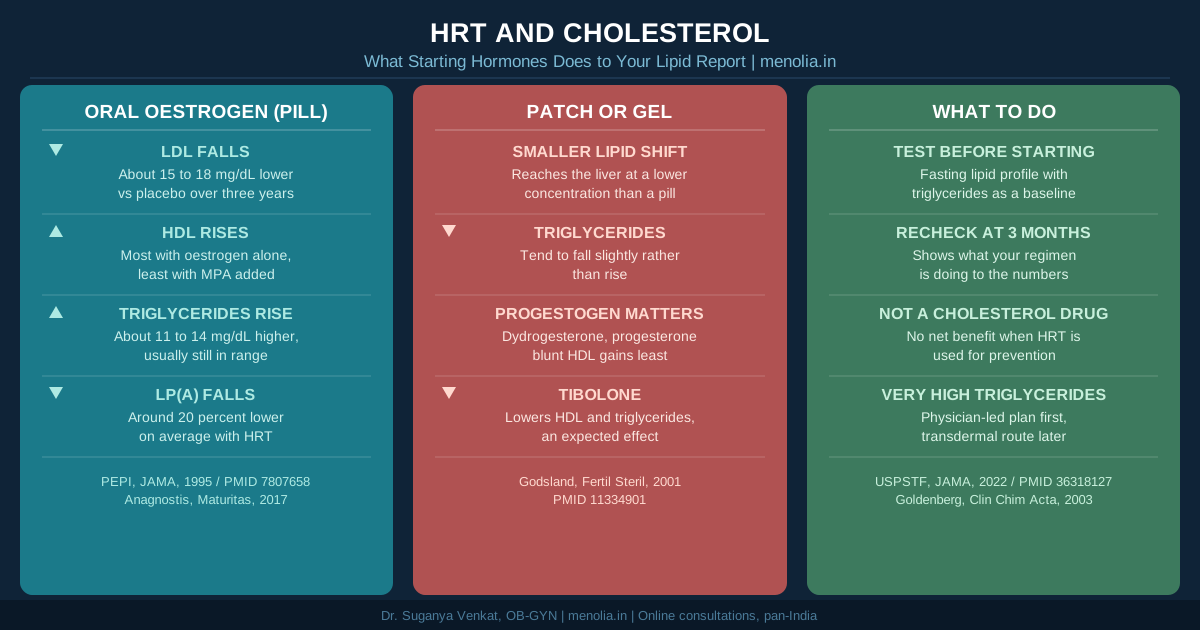
The best long-term data still come from the PEPI trial (Writing Group for the PEPI Trial, JAMA, 1995, PMID 7807658). It randomised 875 healthy postmenopausal women aged 45 to 64 to placebo, oral oestrogen alone, or oral oestrogen with one of three progestogen regimens, and followed them for three years. Compared with placebo, every active treatment:
- Lowered LDL cholesterol by about 14.5 to 17.7 mg/dL
- Raised triglycerides by about 11.4 to 13.7 mg/dL
- Raised HDL cholesterol, by an amount that depended on the progestogen (more on this below)
The oestrogen in PEPI was conjugated equine oestrogen, the Premarin-type tablet. Many women in India take estradiol valerate or estradiol tablets instead, such as Progynova. The direction of change is the same. In a randomised crossover study in healthy postmenopausal women (Walsh BW et al., N Engl J Med, 1991, PMID 1922206), oral estradiol 2 mg a day lowered LDL by about 14 percent and raised HDL by about 15 percent.
Why the triglyceride rise? Anything swallowed passes through the liver before it reaches the rest of the body. Oral oestrogen arrives at the liver in a concentrated dose, and the liver responds by clearing LDL faster and also by producing more triglyceride-rich particles. The same study found that most of these extra particles were cleared directly rather than converted into LDL. An average rise of 11 to 14 mg/dL, as in PEPI, is small enough that a woman who starts comfortably within the normal range will usually stay within it.
There is a fourth number that rarely appears on a routine Indian lipid profile but is worth knowing about. Lipoprotein(a), or Lp(a), is a largely inherited cholesterol particle that diet and statins barely touch. A meta-analysis of 24 randomised studies (Anagnostis P et al., Maturitas, 2017, PMID 28364865) found HRT lowered Lp(a) by about 20 percent on average, with oral oestrogen lowering it more than transdermal, and with no clear difference whether a progestogen was added or not.
Why a Patch or Gel Changes the Picture
Transdermal oestrogen, through a patch such as Estradot or a gel such as Oestrogel, is absorbed through the skin and reaches the liver only at the lower concentration found in general circulation. The liver’s lipid response is much smaller.
In the same Walsh crossover study, transdermal estradiol produced no measurable change in LDL or HDL over its six-week treatment period, although that arm was small. The larger picture comes from a pooled analysis of 248 studies covering 42 different HRT regimens (Godsland IF, Fertil Steril, 2001, PMID 11334901). Across that body of evidence, oral oestrogens raised triglycerides, while transdermal estradiol lowered them.
Put side by side:
| Lipid measure | Oral oestrogen | Transdermal oestrogen (patch or gel) |
|---|---|---|
| LDL cholesterol | Falls, often by 15 mg/dL or so | Smaller change |
| HDL cholesterol | Rises | Smaller change |
| Triglycerides | Rise modestly | Tend to fall slightly |
| Lipoprotein(a) | Falls | Falls, but less |
Neither column is “better” in general. Oral oestrogen gives a bigger LDL and Lp(a) benefit at the cost of a triglyceride rise. Transdermal oestrogen leaves the panel closer to where it started, which matters most for women with high triglycerides, diabetes, or fatty liver. Route is also decided by clot risk, migraine, convenience and cost, which our guide on HRT patch, gel or pill covers in full.
Starting HRT and worried about your cholesterol report? Dr. Suganya looks at your lipid profile, sugar, liver tests and symptoms together over a video consultation before suggesting a route and a follow-up plan.
Your Progestogen Also Shapes the HDL Number
If you still have a uterus, oestrogen is always paired with a progestogen to protect the womb lining. That second medicine has its own small effect on HDL, and the differences are consistent enough to be worth knowing.
In PEPI, HDL fell by 1.2 mg/dL on placebo. It rose by 5.6 mg/dL on oestrogen alone, by 4.1 mg/dL when oestrogen was paired with cyclic micronised progesterone, and by only 1.2 to 1.6 mg/dL when it was paired with medroxyprogesterone acetate. The progestogen did not undo the LDL fall. It mainly trimmed the HDL rise.
The Godsland pooled analysis ranked the progestogens by how much they blunt oestrogen’s effects on HDL and triglycerides, from least to most: dydrogesterone and medrogestone, then progesterone, cyproterone acetate, medroxyprogesterone acetate, transdermal norethisterone acetate, norgestrel, and oral norethisterone acetate.
For women in India this is mostly reassuring, because the two progestogens most often paired with oestrogen here, dydrogesterone (Duphaston) and micronised progesterone (Susten), sit at the gentle end of that list. Our post on Susten and Duphaston explains how the two differ in other ways.
Keep the size of these effects in proportion. A difference of 3 or 4 mg/dL in HDL is small, and the review’s author noted that the clinical meaning of these lipid differences was still to be worked out. Progestogen choice is driven mainly by protecting the womb lining, bleeding pattern and side effects. Lipids are a tie-breaker at most.
What about tibolone?
Tibolone (Livial and its Indian generics) behaves differently. In the Godsland analysis it lowered both HDL cholesterol and triglycerides. So if your HDL drops after switching to tibolone, that is the expected pharmacology rather than a sign that something is wrong. The Anagnostis meta-analysis found no significant effect of tibolone on Lp(a). Our tibolone guide covers who it suits and what to monitor.
Better Numbers Do Not Make HRT a Cholesterol Treatment
This is the point I spend the most time on, because the lipid findings above are easy to over-read. If oral oestrogen lowers LDL by 15 mg/dL and raises HDL, why not use it for cholesterol?
Because the question has been tested directly, and the answer was no. After reviewing the prevention trials, the US Preventive Services Task Force (Mangione CM et al., JAMA, 2022, PMID 36318127) concluded with moderate certainty that hormone therapy taken to prevent chronic conditions, including heart disease, has no net benefit. That applied to both combined oestrogen-progestogen and oestrogen alone.
HRT is prescribed for menopausal symptoms, and for bone protection in the right woman. The lipid shift is a side effect, and for most women a mild and welcome one. It is not a reason to start HRT, and improved numbers on HRT are not a reason to stop a statin a physician has prescribed. If you are already on a statin, our post on taking HRT and statins together covers how the two combine on your lipid panel.
The reverse is also true, and just as useful to hear. Raised cholesterol on its own does not rule HRT out. The North American Menopause Society’s 2022 hormone therapy position statement (Menopause, 2022, PMID 35797481) describes the risks of hormone therapy as depending on the type, dose, duration, route, timing of starting, and whether a progestogen is used, and it judges the balance favourable for bothersome hot flushes in women under 60 or within ten years of menopause who have no contraindications. A high LDL is one input into which form of HRT fits you, and part of a wider cardiovascular conversation, rather than an automatic no.
When Triglycerides Change the Plan
For the large majority of women, the triglyceride rise on oral oestrogen is small. There is one uncommon situation where it matters a great deal: a woman whose triglycerides are already very high, often because of an inherited tendency, poorly controlled diabetes, or both.
A US lipid clinic described 56 women referred with triglycerides above 400 mg/dL or a history of triglyceride-related pancreatitis (Goldenberg NM et al., Clin Chim Acta, 2003, PMID 12763274). Twenty-four were taking oestrogen-containing treatment when they arrived. Seventeen had a history of acute pancreatitis, and nine of those had been on hormone treatment when it happened. When the hormones were stopped and a very low-fat diet with triglyceride-lowering medicines was started, median triglycerides in that group fell from 1,270 to 284 mg/dL within two to four weeks. The authors concluded that triglycerides should be measured before hormone treatment starts, and that it should not be given when triglycerides are already 500 mg/dL or above.
This was a selected group of women at a specialist clinic, so it does not describe what happens to a typical woman starting HRT. What it shows is why a baseline triglyceride level is worth having. If yours is very high, the first step is bringing it down with your physician, and any later HRT discussion would favour a transdermal route, which does not carry oral oestrogen’s triglyceride-raising effect. Women with type 2 diabetes are the group where this comes up most, which our post on HRT and diabetes discusses.
What to Test, and When
Nothing elaborate is needed, and much of it is testing you may already be due for.
Before starting: a fasting lipid profile. Total cholesterol, LDL, HDL and triglycerides. It gives a starting point, and it identifies the uncommon woman with very high triglycerides before, rather than after, oral oestrogen. It is particularly worth doing if you have diabetes, fatty liver, a strong family history of high triglycerides or early heart disease, or a past episode of pancreatitis. Fasting blood sugar, and liver and thyroid tests where relevant, round out the picture.
About three months in: a repeat lipid profile. In the controlled studies, oral oestrogen’s lipid effects were measurable within six weeks to three months, so a three-month report shows what your regimen is doing. It also gives any future report a fair comparison point.
Reading the result. On oral HRT, expect LDL to be similar or lower, HDL similar or higher, and triglycerides a little higher. On a patch or gel, expect the panel to look much like your baseline. On tibolone, expect HDL to be lower. If LDL has gone up noticeably on HRT, that is not the usual oestrogen effect, and it is worth looking for another cause: the ongoing menopausal rise itself, weight or diet changes, or an underactive thyroid, which becomes more common at this age and has an unfavourable effect on lipids (Rizos CV et al., Open Cardiovasc Med J, 2011, PMID 21660244). Our post on thyroid changes during menopause covers that overlap.
Share the report with whoever manages your heart risk. If a physician or cardiologist looks after your blood pressure, sugar or cholesterol, send them the post-HRT lipid profile too, so they are not comparing against a baseline that no longer reflects your treatment.
In Menolia consultations, Dr. Suganya Venkat, an OB-GYN with over 15 years of practice, asks for that baseline lipid report alongside the symptom history before any HRT prescription is written. Very often the report settles the route question on its own, and it saves a worried phone call three months later when the triglycerides come back a little higher.
The Practical Summary
- Oral HRT usually improves LDL, HDL and Lp(a), and raises triglycerides modestly.
- A patch or gel leaves your lipids closer to baseline and tends to lower triglycerides slightly.
- Dydrogesterone and micronised progesterone are the kindest progestogens for HDL. Tibolone lowers HDL.
- HRT is not a cholesterol or heart-protection medicine, and raised cholesterol alone does not rule it out.
- Test lipids before starting and again at around three months. Very high triglycerides mean a physician-led plan first and, usually, a transdermal route later.
For the wider decision about whether HRT suits you at all, our complete guide to HRT in India and the free HRT decision guide walk through benefits, risks and timing. For the broader cardiovascular picture after menopause, see menopause and heart health.
Frequently Asked Questions
Does HRT raise or lower cholesterol?
Mostly it lowers the harmful part. Oral oestrogen lowers LDL cholesterol, by around 15 to 18 mg/dL in the PEPI trial, and raises HDL. It also raises triglycerides a little. Transdermal oestrogen through a patch or gel changes cholesterol much less and tends to lower triglycerides slightly. So HRT rarely makes a lipid profile worse overall, except for the triglyceride rise on oral forms.
Is a patch or a pill better for cholesterol?
It depends on which number matters for you. A pill gives a larger LDL fall and HDL rise but raises triglycerides. A patch or gel keeps your lipid profile closer to where it was and does not raise triglycerides. If your triglycerides are high, or you have diabetes or fatty liver, transdermal is usually the more sensible choice. If they are normal, either route can work, and other factors like clot risk and convenience decide it.
Can I start HRT if my cholesterol is already high?
Often, yes. A raised LDL on its own is not a reason to refuse HRT. It is one part of a wider cardiovascular assessment that includes blood pressure, sugar, smoking, family history, and any existing heart disease. If your risk is high enough to need a statin, that is managed separately by your physician, and HRT can usually sit alongside it. Established heart disease or a previous stroke is a different conversation and needs your physician or cardiologist involved.
Will HRT raise my triglycerides?
Oral HRT usually raises them modestly, by around 11 to 14 mg/dL on average in the PEPI trial, which keeps most women within the normal range. Transdermal oestrogen does not have this effect and tends to lower triglycerides slightly. If your triglycerides are already very high, oral oestrogen is best avoided and the triglycerides treated first.
Should I get a lipid test before starting HRT?
It is a sensible, inexpensive step. A fasting lipid profile gives you a baseline, identifies the uncommon woman with very high triglycerides before oral oestrogen is started, and makes the next report easier to interpret. Repeating it about three months after starting shows what your specific regimen is doing.
Can I take HRT instead of cholesterol medicine?
No. Even though HRT can improve lipid numbers, the US Preventive Services Task Force found no net benefit from hormone therapy used to prevent chronic disease, including heart disease. HRT is for menopausal symptoms and, in some women, bone protection. If you need a statin, HRT does not replace it, and any change to a statin belongs with the doctor who prescribed it.
My HDL dropped after I started tibolone. Is something wrong?
Usually not. A lower HDL is a known effect of tibolone, and triglycerides tend to fall too. It does not mean the medicine has harmed you. Share the report with your doctor, who can look at it alongside your other risk factors and decide whether tibolone is still the best fit or whether a different option would suit you better.
Starting HRT, or already on it and puzzled by your latest lipid report? Bring both reports, before and after, and your current prescription, and we can go through what has changed and why. Message Dr. Suganya Venkat on WhatsApp for a Rs 399 video consultation.