Yes, women still have sexual feelings after menopause. Desire commonly changes and often reduces, but it does not switch off, and for most women the changes are treatable. Falling oestrogen and testosterone lower desire and cause vaginal dryness that can make sex uncomfortable, yet moisturisers, lubricants, low-dose vaginal oestrogen, pelvic-floor exercises, better sleep, and open conversation with your partner all help. A satisfying intimate life after menopause is normal and achievable.
Changes in libido and sexual comfort after menopause are among the most common, and least discussed, experiences of this life stage. In over 15 years as an OB-GYN, I have found that this comes up constantly in the consulting room, usually years after it started. Many women assumed it was simply part of getting older. Many believed they were the only one feeling this way.
You are not. And there is a great deal that can be done.
This post covers what actually changes biologically, why it happens, and the evidence-based approaches that help women restore comfort and intimacy at this stage of life.
What Is Normal After Menopause
In an international survey of 4,246 women aged 55 to 65 across five countries, 39 percent of the postmenopausal respondents had experienced vaginal atrophy, the condition now called genitourinary syndrome of menopause (Nappi RE and Kokot-Kierepa M, Maturitas, 2010, PMID 20828948). That is nearly two in five women, not a small subgroup. Reduced desire is harder to pin to a single number, because studies measure it in different ways.
What is also normal: women who continue to enjoy an active and satisfying intimate life well after menopause. The decline in libido and comfort is not universal, and it is not inevitable. But when it does happen, the causes are clear and biological, and those causes respond to targeted strategies.
If you are experiencing changes, you are not ageing badly. You are going through a physiological transition that medicine now understands quite well.
Why Libido Changes: The Hormonal Picture
Most of what shifts in sexual function during and after menopause comes down to two hormones, along with the sleep and mood changes that travel with them.
Oestrogen. Oestrogen maintains the health and elasticity of vaginal tissue and is responsible for natural lubrication. When oestrogen levels fall in the years around menopause, vaginal tissue gradually becomes thinner, drier, and more sensitive. This condition is now called genitourinary syndrome of menopause (GSM), a term that replaced the older “vaginal atrophy” to reflect that the bladder and urethra are also affected (Portman DJ and Gass ML, Menopause, 2014, PMID 25160739). GSM develops slowly, and many women do not connect the physical discomfort they feel during sex with an oestrogen-related tissue change. But the connection is direct.
Testosterone. Women produce testosterone in smaller amounts than men, but it plays a real role in sexual desire. Testosterone levels begin declining from a woman’s 30s onward and continue falling through perimenopause and beyond. The Global Consensus Position Statement on testosterone therapy for women concluded that testosterone therapy for postmenopausal women with hypoactive sexual desire disorder (HSDD) has a beneficial effect on sexual function, including desire and arousal (Davis SR et al., J Clin Endocrinol Metab, 2019, PMID 31498871). The link between testosterone and desire in women is biologically established.
Sleep, mood, and daily load. After menopause, progesterone is no longer produced in cyclical amounts. Sleep disruption and mood changes are common through this transition, and both blunt desire. A woman who is not sleeping well, is managing mood swings, and is carrying the weight of a caregiving role (many women in their 40s and 50s are caring for both aging parents and young adults at home) simply has less capacity for intimacy. This is not a personal failing. It is a physiological and contextual reality that deserves attention.
Physical Changes That Affect Intimacy
Beyond dryness, menopause brings several other physical shifts worth understanding clearly.
Longer arousal time. Many women notice it takes more time to become aroused after menopause. This is physiological, not a reflection of attraction or emotional connection. Blood flow to the pelvic area decreases with reduced oestrogen, and the physical responses that accompany arousal take more time. Building in time without pressure is a practical and evidence-supported adaptation.
Pelvic floor changes. The muscles of the pelvic floor tend to lose tone with age and with reduced oestrogen. This can contribute to discomfort during sex, reduced sensation, and sometimes difficulty with orgasm. Pelvic floor physiotherapy is a well-researched intervention. Regular Kegel exercises, done consistently, improve muscle tone and blood flow to the pelvic area. The basic technique: contract the pelvic floor (the muscles you would use to stop the flow of urine), hold for 5 seconds, release fully, and repeat 10 times, three times a day. If you are not sure whether you are doing them correctly, a pelvic floor physiotherapist can guide you.
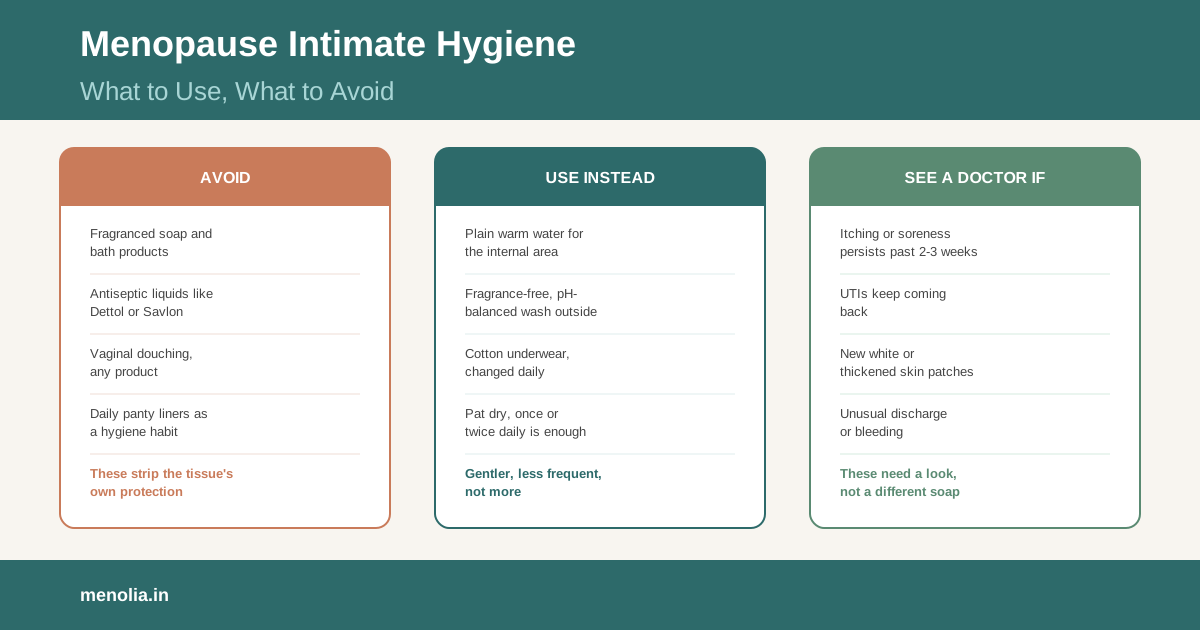
Vulval skin sensitivity. The skin of the vulval area may become more reactive to friction, certain detergents, fragranced soaps, or synthetic fabrics. Switching to fragrance-free products and 100% cotton underwear is a straightforward and effective change.
For a detailed look at vaginal dryness specifically, including the full range of treatment options, I have written a complete guide here: Vaginal Dryness During Menopause: Breaking the Silence.
The Psychological and Relationship Layer
The body is only part of the picture. Libido lives at the intersection of biology, mental state, and relationship context.
Body image during this transition. Menopause brings visible changes: weight redistribution (particularly around the abdomen), skin texture shifts, hair thinning. Many women carry complicated feelings about their bodies at this stage. A woman who feels uncomfortable in her body is likely to feel less desire for intimacy, and that is not a character flaw. It is a natural response to significant physical change. The emotional work of this transition matters just as much as the physical. Navigating mood and anxiety during menopause is closely tied to sexual wellbeing.
Sleep and energy. Disrupted sleep, anxiety, and persistent fatigue are common in perimenopause and beyond, and all of them suppress libido. Addressing these root causes, through sleep hygiene, regular movement, and sometimes a conversation with your gynaecologist, often has a noticeable positive effect on intimate wellbeing. Related reading: Menopause Sleep Problems: What Actually Helps.
Partner understanding. Partners who are not informed about menopausal changes sometimes misread physical discomfort or reduced desire as emotional withdrawal or personal rejection. That misread creates distance and reduces the sense of safety that intimacy requires. Open, non-blaming conversation about what is happening physiologically is one of the most effective interventions available. Some couples find it helpful to have this conversation with a therapist. Our colleague Dr. Varsha Viswanathan, psychiatrist and psychotherapist at Fertilia Health, works with women navigating the emotional complexity of this life stage. Menopause and relationships: more on navigating this together.
Cultural silence. In many Indian families and communities, sexual health after 40 is simply not discussed. There is no language for it, and often an unspoken sense that desire is somehow inappropriate at this stage. This cultural silence keeps women from seeking help that is real and available. Your wellbeing, including your intimate wellbeing, is not less important after 45. It is worth the same attention as any other aspect of your health.
If you are experiencing significant changes in libido or discomfort during intimacy, you do not have to navigate this on your own. Dr. Suganya Venkat offers personalised consultations for women in perimenopause and post-menopause. Reach her directly on WhatsApp: wa.me/919940270499
Evidence-Based Approaches That Help
These are the strategies with the strongest research support for women in your situation.
Vaginal moisturisers. Non-hormonal vaginal moisturisers (available at most Indian pharmacies) are different from lubricants. They are applied every two to three days to maintain tissue moisture consistently over time, not just during sex. The North American Menopause Society’s 2020 position statement on genitourinary syndrome of menopause lists vaginal lubricants and moisturisers among the over-the-counter options with demonstrated effectiveness, with the choice depending on how severe the symptoms are (NAMS 2020 GSM Position Statement Editorial Panel, Menopause, 2020, PMID 32852449).
Lubricants. Used during sex, lubricants reduce friction and discomfort directly. Water-based formulas are the most reliable starting point. Avoid petroleum-based products (such as Vaseline) if using latex condoms. Avoid glycerin-containing products if you are prone to yeast infections. Fragrance-free options are less likely to cause irritation on sensitive tissue.
Pelvic floor exercises. A consistent Kegel routine improves blood flow, tone, and sensation in the pelvic area. The technique is described above. Consistency matters more than intensity: three short sessions a day, every day, over weeks, produces measurable change. Pelvic floor physiotherapy is the next step if exercises alone are not producing results.
Regular physical activity. Exercise supports several of the things that feed into sexual function: cardiovascular health, mood and body image, and sleep quality. Walking, swimming, yoga, and resistance training all qualify. Thirty or more minutes on most days is a reasonable target. Full guide to exercise during menopause.
Nutrition: what the Indian diet already offers. Phytoestrogens, plant compounds with mild oestrogen-like activity, are found in foods common across Indian households: soya (tofu, soya milk, edamame), flaxseed (alsi), sesame seeds (til), and legumes such as rajma, chana, and moong dal. Their effect is mild compared to medical oestrogen, but regular dietary inclusion contributes over time. Ragi, rich in calcium, supports bone density alongside the phytoestrogen-containing foods. These are not substitutes for medical treatment when that is needed. They are real, evidence-aligned contributions.
Mindfulness and stress reduction. Mindfulness-based sex therapy has been studied specifically in women with desire and arousal difficulties. In one study of 79 such women, the agreement between physical arousal and felt arousal increased significantly after four sessions of group mindfulness-based sex therapy (Brotto LA et al., Arch Sex Behav, 2016, PMID 26919839). The reasoning is straightforward: desire requires mental presence. When attention is occupied by stress, fatigue, or self-critical thought, the body does not easily follow. Even ten minutes of daily breathwork or body-scan meditation is a reasonable place to start.
Low-dose vaginal oestrogen. When moisturisers and lubricants are not sufficient, low-dose vaginal oestrogen (applied locally as a cream, ring, or tablet) is highly effective for GSM. It has minimal systemic absorption, unlike oral HRT, and is considered safe for most women including many who cannot use systemic hormone therapy. This is a decision to make with your gynaecologist, based on your individual health history. It is not a last resort. For many women, it is the most direct and effective route to tissue comfort and restored function. For a broader overview of the HRT conversation: HRT for Menopause: Benefits, Risks and Guide.
When to See Your Gynaecologist
These are signs worth raising at your next appointment rather than waiting:
- Sex is consistently painful (dyspareunia). This is a clinical condition. It is treatable.
- Loss of libido is significantly affecting your quality of life or your relationship.
- You have any bleeding after sex. This always warrants evaluation.
- Urinary symptoms (urgency, frequency, recurrent infections) accompany sexual changes. These are linked through GSM.
- You want to understand whether you might benefit from testosterone therapy or low-dose vaginal oestrogen.
An OB-GYN who works with menopausal women has these conversations every day. Nothing you describe will be unusual or inappropriate to raise.
The Bigger Picture
Intimacy after menopause looks different than it did at 30. Many women describe this stage, once the physical barriers are addressed, as one of greater ease in communication, less performance pressure, and more genuine focus on connection.
The goal is not to recapture a younger experience. It is to find what feels good and right for this stage. If you want a place to begin, start with the practical steps in the section above, and take the rest to your gynaecologist.
Frequently Asked Questions
Kya menopause ke baad bhi sex feelings aati hain?
Yes. Sexual feelings and desire do continue after menopause. Many women quietly worry that menopause means the end of their intimate life, but that is not what the evidence shows. Desire often reduces because oestrogen and testosterone fall, and vaginal dryness can make sex uncomfortable, but the feelings themselves do not disappear. With vaginal moisturisers, lubricants, low-dose vaginal oestrogen where needed, pelvic-floor exercises, good sleep, and open communication with a partner, most women can continue to enjoy a satisfying intimate life. If your desire has dropped sharply or sex has become painful, that is a treatable medical issue worth raising with your gynaecologist.
Is it normal to lose interest in sex completely after menopause?
Yes, significant reduction or absence of sexual desire is among the most common changes of the post-menopause years. It has clear biological causes, primarily the decline in oestrogen and testosterone, and it responds to targeted approaches. It is not a character flaw, and it is not permanent by default.
Will my libido return on its own, or do I need to do something?
For some women, libido does improve in the years after menopause as the body stabilises. For others, the changes persist without intervention. The most reliable path is addressing the underlying physical factors, particularly vaginal discomfort, alongside sleep quality, mood, and stress, while remaining in open communication with your gynaecologist.
Can vaginal dryness alone reduce my desire for sex?
Yes, and this is one of the most important connections to understand. When sex is uncomfortable or painful, the mind gradually associates intimacy with discomfort. Over time, this reduces desire as a protective response. Treating vaginal dryness effectively, with moisturisers, lubricants, or low-dose vaginal oestrogen, often restores libido significantly.
Are vaginal lubricants and moisturisers safe for long-term use?
Yes. Non-hormonal vaginal moisturisers and water-based lubricants are safe for regular, long-term use. They have no systemic effects and are available without a prescription at most Indian pharmacies.
Is testosterone therapy available for low libido in India?
Testosterone therapy in doses appropriate for female physiology is used in some countries for postmenopausal HSDD. The evidence base for that indication is positive (Davis SR et al., J Clin Endocrinol Metab, 2019, PMID 31498871). In India, formulations approved specifically for women are currently limited, but this is a conversation worth having with a gynaecologist who specialises in menopausal medicine. The landscape is evolving.
Can changing my diet actually help with libido?
Diet contributes in meaningful, if indirect, ways. Foods supporting sleep quality, stable mood, and cardiovascular health all feed into sexual wellbeing. Phytoestrogen-rich foods (soya, flaxseed, til, legumes) add mild oestrogen-like activity. These contributions are real, but are not substitutes for medical treatment when that is clinically indicated.
Does menopause mean my intimate life is over?
No. Research is clear that many postmenopausal women continue to have active, satisfying intimate lives. The transition requires adaptation, not resignation. With the right information and the right support, most of the physical barriers to sexual comfort are addressable.
Every woman’s experience of menopause is different. For personalised guidance on what you are experiencing, Dr. Suganya Venkat is available for one-to-one consultations. Reach her on WhatsApp: wa.me/919940270499
References: The 2020 genitourinary syndrome of menopause position statement of The North American Menopause Society, Menopause, 2020, PMID 32852449 (NAMS 2020 GSM Position Statement Editorial Panel). | “Women’s voices in the menopause: results from an international survey on vaginal atrophy” by Nappi RE and Kokot-Kierepa M, Maturitas, 2010, PMID 20828948. | “Genitourinary syndrome of menopause: new terminology for vulvovaginal atrophy” by Portman DJ and Gass ML, Menopause, 2014, PMID 25160739. | “Global Consensus Position Statement on the Use of Testosterone Therapy for Women” by Davis SR et al., J Clin Endocrinol Metab, 2019, PMID 31498871. | “Mindfulness-based sex therapy improves genital-subjective arousal concordance in women with sexual desire/arousal difficulties” by Brotto LA et al., Arch Sex Behav, 2016, PMID 26919839.